English
 Chinese
 Pусский
 Français
 Español
 Deutsch
 Português
 한국인
한국인 عربي
عربي Prev:
null

Sep 14,2026
Pageview: 11
Overvoltage tends to cause faster, more immediately destructive damage to electronic equipment and insulation systems. Undervoltage is often more damaging to electric motors and compressors, but its effects accumulate over a longer period. The answer is not straightforward because it depends entirely on the type of load connected to the circuit. This article examines how each condition affects different equipment categories, what the relevant voltage tolerance standards say, and how to approach protection settings for both.
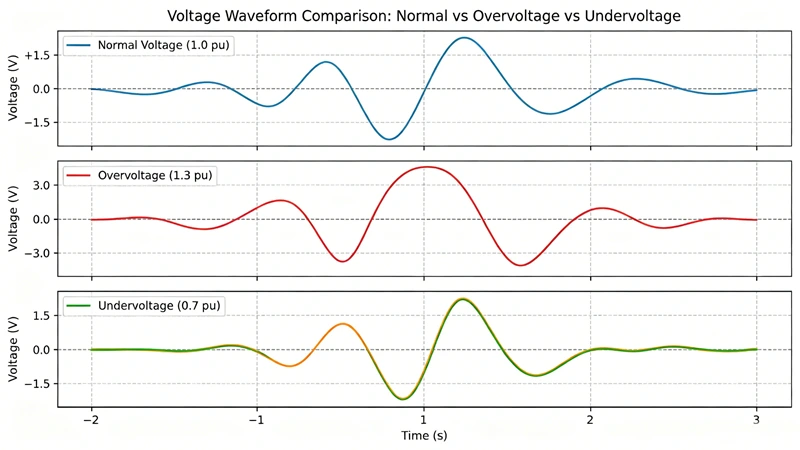
The question of which is more damaging has no single answer. Electrical equipment is not a homogeneous group. A motor responds to voltage deviation through a completely different physical mechanism than a printed circuit board. Understanding the damage pathway for each load type is the first step toward selecting the right protection.
Two fundamental physical relationships explain most of the difference. First, motor torque varies approximately with the square of applied voltage. Second, the useful life of motor winding insulation roughly halves for every 10°C increase in operating temperature. These two principles drive most of the damage that undervoltage causes in motor-driven loads.
For electronic equipment, a different set of physics applies. Semiconductor junctions, capacitors, and power supply components have rated maximum voltages. When supply voltage exceeds these ratings, breakdown can occur in milliseconds or even microseconds.
Overvoltage occurs when the supplied voltage exceeds the equipment's rated maximum. The damage mechanisms fall into two general categories: insulation stress and dielectric breakdown.
Effect on insulation systems. Sustained overvoltage increases leakage currents and stresses insulation materials. Over time, this leads to accelerated aging and eventual breakdown, which can result in arcing and short circuits. For motor windings, overvoltage also pushes the magnetic circuit toward saturation, which increases current draw and temperature.
Effect on electronic components. Overvoltage events can cause immediate destruction: voltage breakdown of semiconductor junctions, damage to PCB traces and contacts, and failure of triacs or thyristors through high dV/dt transients. Even when a component survives an overvoltage event, repeated exposure shortens its operational lifespan.
Effect on power supplies. Linear power supplies, such as those used in some microwave ovens, are particularly susceptible. Any device with an AC motor also faces risk because overvoltage can push the magnetic circuit into saturation.
| Equipment Type | Primary Overvoltage Damage Mechanism | Time to Damage |
|---|---|---|
| Sensitive electronics (PCBs, controllers) | Semiconductor junction breakdown, PCB trace damage | Milliseconds to seconds |
| Motor windings | Insulation stress, magnetic saturation, overheating | Minutes to hours (cumulative) |
| Linear power supplies | Component overstress | Seconds to minutes |
| Compressor motors | Insulation degradation, increased current draw | Minutes to hours |
Undervoltage occurs when the supply voltage drops below the level necessary for proper equipment operation. Unlike overvoltage, which can cause immediate destruction, undervoltage damage is often cumulative and less visible in the short term.
Effect on motors. When voltage drops, motor torque decreases as the square of the voltage reduction. To maintain the same mechanical output, the motor draws more current. This increased current causes additional heating. Research shows that at full load, a 10% undervoltage increases current by approximately 11%, raises copper losses by about 23%, and increases winding temperature by 6-7°C — which can reduce insulation life expectancy by roughly 50%.
Effect on compressors and HVAC equipment. Compressor motors are among the most vulnerable to undervoltage. When voltage sags below a threshold, compressors may stall. Studies on residential air conditioners show that contactors may begin to open at 60-61% of nominal voltage within 1.8 to 2.4 cycles after the sag begins. Some compressor motors can stall between 60% and 70% of nominal voltage, well before the contactor drops out. Repeated stalling and restarting places enormous mechanical and thermal stress on the compressor.
Effect on control systems. Undervoltage can cause contactors to chatter, control relays to drop out, and programmable controllers to reset unexpectedly. These events may not cause immediate physical damage but can disrupt processes and create safety hazards.
Effect on lighting and resistive loads. Incandescent lamps dim, but the effect on resistive loads is generally less damaging than on motor or electronic loads. However, some types of lighting, particularly HID lamps, may extinguish and require a cool-down period before restriking.
Understanding what equipment is designed to tolerate provides the baseline for setting protection thresholds.
ANSI C84.1 establishes voltage ratings and operating tolerances for 60 Hz electric power systems. Range A, the preferred band for normal conditions, specifies ±5% at the service point for service voltage. Range B permits limited excursions beyond Range A, with utilization voltage limits of approximately +5.8% to −8.3% for low-voltage service. The standard defines a utilization voltage range of −8.3% to +4.2% for 120 V systems under Range A.
NEMA MG1 specifies that motors shall operate successfully under running conditions with voltage variation up to ±10% of rated voltage at rated frequency. For a nominally 460 V motor, this means an acceptable range of approximately 414 V to 506 V.
IEC 60038 specifies standard voltage values for electrical supply systems and serves as reference values for equipment and system design.
CBEMA/ITIC curve defines the AC input voltage envelope that information technology equipment can typically tolerate. The steady-state range is ±10% from nominal, with the permissible voltage level rising to +30% for durations under half a cycle.
These standards provide the design baseline. But equipment operating at the edge of its tolerance range is not operating optimally. The protection threshold should typically be set tighter than the equipment's maximum tolerance to provide a safety margin.
| Standard | Scope | Steady-State Overvoltage Limit | Steady-State Undervoltage Limit |
|---|---|---|---|
| ANSI C84.1 Range A (service) | Power systems | +5% | −5% |
| ANSI C84.1 Range B (utilization) | Power systems | +5.8% | −8.3% |
| NEMA MG1 | Motors | +10% | −10% |
| ITI (CBEMA) Curve | IT equipment | +10% | −10% |
It is important to distinguish between sustained voltage deviation and momentary voltage sags or swells. A voltage sag lasting a few cycles may cause equipment to trip or reset. A sustained undervoltage condition lasting minutes or hours causes cumulative thermal damage. The protection strategy differs accordingly.
For short-duration events, the concern is operational disruption: compressors stalling, control systems resetting, contactors chattering. For sustained events, the concern is thermal damage to motors and insulation. An effective protection device should account for both time scales. Look for devices with configurable trip delays that can differentiate between a momentary sag and a sustained undervoltage condition.
For motor-driven equipment, undervoltage is generally more dangerous than overvoltage. The reason lies in the thermal damage pathway.
When voltage is low, the motor draws more current to deliver the same mechanical power. This current increase directly translates into additional I²R losses in the windings. The temperature rise accelerates insulation aging. Because insulation life halves for every 10°C of additional heat, even a modest sustained undervoltage can significantly shorten motor life.
Refrigeration and air conditioning compressors are particularly vulnerable. Test data shows that contactors in HVAC equipment may begin to open when voltage drops to approximately 60% of nominal, and compressors can stall at 60-70% of nominal voltage. The restart attempt after a stall draws locked-rotor current, which is typically 5 to 8 times full-load current. Repeated stall-restart cycles can quickly destroy a compressor.
For electronic equipment, overvoltage poses the greater immediate risk. The damage can occur in milliseconds.
Semiconductor junctions have specific voltage ratings. When supply voltage exceeds these ratings, the junction can break down. PCB traces can be destroyed, and bonding components can fail. A single significant overvoltage event can permanently destroy equipment that would have operated for years under normal conditions.
Even for electronics, however, sustained undervoltage is not harmless. Microprocessor-based controllers may reset unpredictably, potentially corrupting data or causing operational errors. Power supplies operating at low input voltage may overheat as they attempt to maintain regulated output. Over time, this can reduce reliability.
An effective voltage protection strategy addresses both overvoltage and undervoltage. The following considerations apply to threshold selection:
Start from the equipment's tolerance. Identify the tightest tolerance among the equipment on the circuit. For a mixed load panel, this is often the electronic equipment, which may have a ±10% tolerance or tighter.
Apply a safety margin. Set the protection threshold inside the equipment's tolerance range. For example, if the equipment is rated for ±10%, consider setting the protection at +8% and −8% to provide a buffer.
Consider trip delay. Overvoltage often benefits from faster response than undervoltage because sustained high voltage stresses electronics quickly. For undervoltage, a short delay can prevent nuisance tripping during motor starting sags, which are normal and temporary.
Account for normal grid variation. Some level of voltage variation is normal. A protection device that trips too frequently becomes a nuisance rather than a safeguard. Devices that allow safe voltage fluctuations within a defined range before activating protection can help prevent false trips.
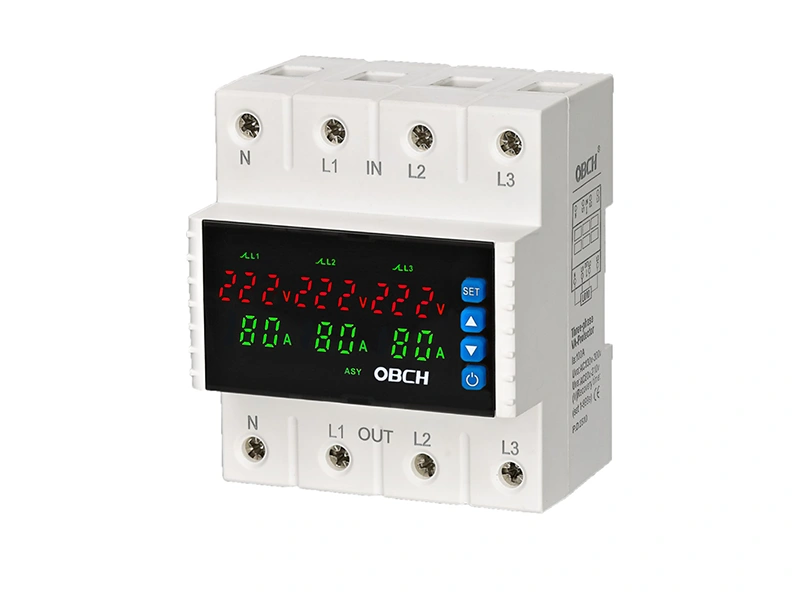
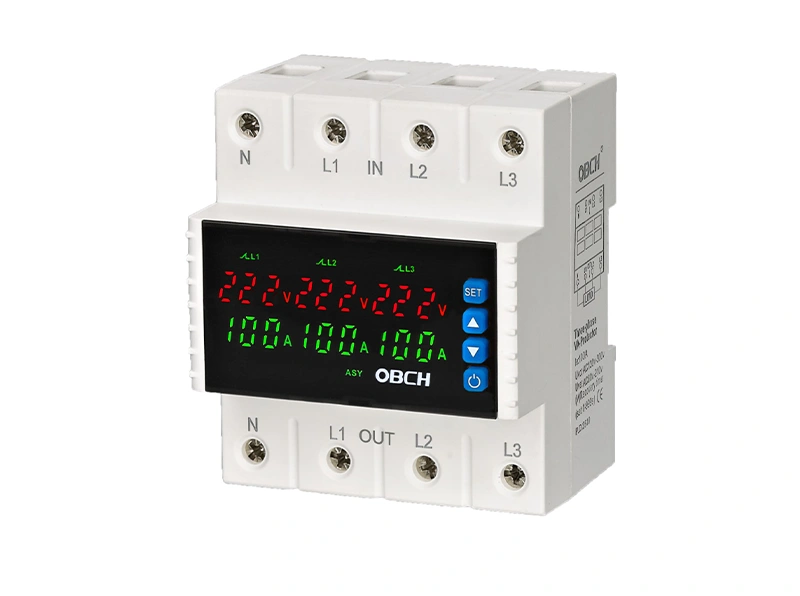
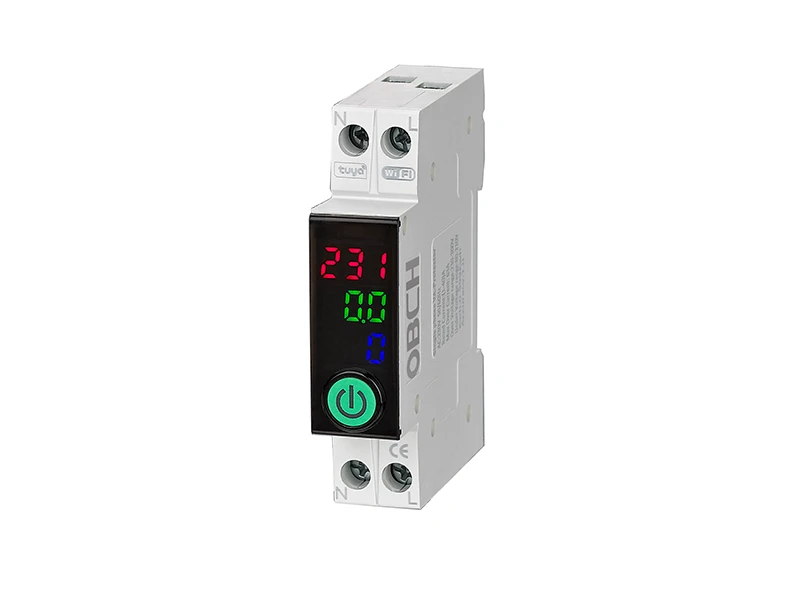
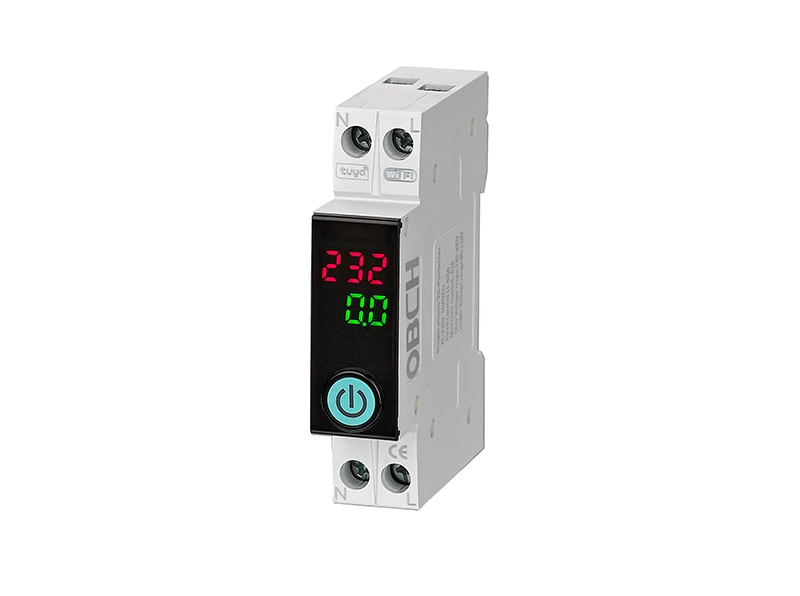
Match the device to the system. Single-phase and three-phase systems require different protection approaches. Three-phase systems also need to account for phase imbalance and phase loss, not just voltage magnitude.
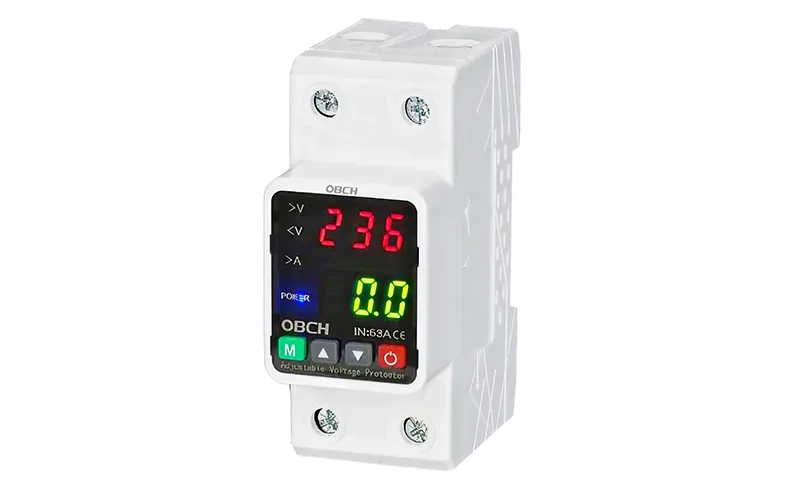
Use this checklist when evaluating voltage protection requirements for a panel or equipment installation:
Can undervoltage damage a motor immediately, or only over time?
Undervoltage damage to motors is primarily cumulative. The increased current causes additional heating, which accelerates insulation aging. However, if the undervoltage is severe enough to cause the motor to stall, the resulting locked-rotor current can cause rapid overheating. Severe undervoltage can damage a motor in minutes, while moderate undervoltage may take months to produce noticeable degradation.
Is a voltage sag the same as undervoltage?
Not exactly. A voltage sag is a temporary reduction in RMS voltage lasting from half a cycle to a few seconds. Undervoltage (or sustained undervoltage) refers to a voltage that remains below nominal for an extended period. The damage mechanisms and protection strategies differ. Sags primarily cause operational disruption, while sustained undervoltage causes thermal damage.
What voltage range is considered safe for household appliances?
This depends on the appliance and the applicable standard. ANSI C84.1 Range A specifies ±5% at the service point for service voltage. For utilization voltage, Range A allows −8.3% to +4.2% for 120 V systems. However, many appliances are designed to tolerate wider ranges. Check the equipment nameplate for specific tolerances.
Why does my voltage protector trip frequently?
Frequent tripping can result from several causes. The grid voltage itself may be unstable or fluctuating near the protection threshold. The protection settings may be too tight for the actual grid conditions at the site. There may be a loose neutral connection causing voltage instability. Or the device itself may be faulty. Review the settings against actual measured voltage conditions before assuming the device is defective. Additional troubleshooting guidance is available through the customer service page.
Do I need separate protection for overvoltage and undervoltage?
Many modern protection devices combine both functions in a single unit. This is generally recommended because the two conditions can occur on the same circuit at different times. A device that monitors both directions provides more comprehensive protection than a single-function device. When reviewing available configurations, confirm that the device can be set independently for overvoltage and undervoltage thresholds.
How does three-phase voltage imbalance affect equipment compared to single-phase voltage deviation?
Three-phase voltage imbalance is a separate power quality issue from voltage magnitude deviation, though they can occur simultaneously. A small voltage imbalance between phases can produce a large current imbalance in motors. The cumulative effect of voltage unbalance combined with over- or undervoltage can lead to extremely high winding temperatures and significantly shortened machine life.
Neither overvoltage nor undervoltage is universally more damaging. The answer depends on what is connected to the circuit:
For motors, compressors, and HVAC equipment: Undervoltage is generally more dangerous because it causes increased current draw and thermal damage over time.
For electronic equipment and control systems: Overvoltage poses the greater immediate risk because damage can occur in milliseconds.
For mixed-load circuits: Both conditions require attention. A protection device that monitors both overvoltage and undervoltage is the practical choice.
The key to effective protection is understanding the equipment's voltage tolerance, setting thresholds that provide a safety margin inside those limits, and configuring trip delays to avoid nuisance tripping during normal operation. If you are evaluating protection options for a specific installation, review the available configurations or discuss your voltage conditions and equipment requirements with the supplier to determine the appropriate specifications.