
Aug 12,2026
Pageview: 44
Many homes and shops install overvoltage protectors, expecting them to block voltage fluctuations and fully protect refrigerators, air conditioners, precision equipment, and high-power appliances from power surges.
But many users face the same problem: even with a protector installed, appliances still break down or get damaged. In most cases, the issue is not with the protector's logic, but with low-quality products on the market that use inferior components and poor manufacturing processes.
Below, we break down 4 key internal differences between a high-quality overvoltage protector and a cheap one — so you can choose a reliable device and truly protect your appliances.
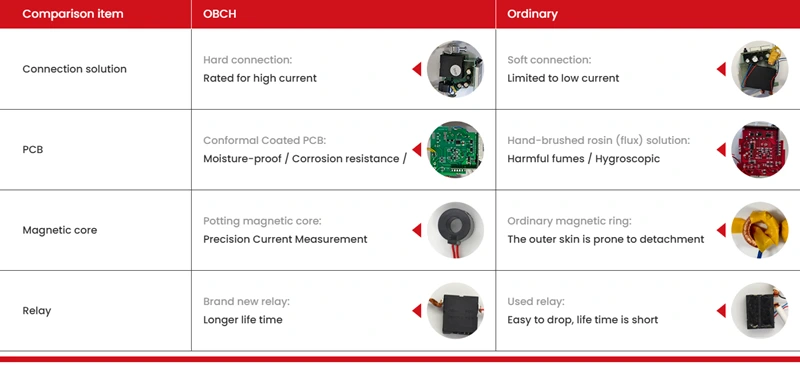
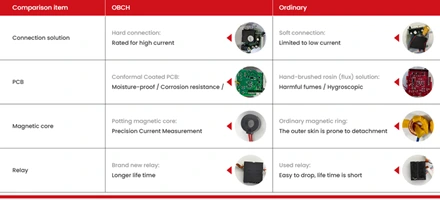
Hard Connection (High Quality):
Uses solid copper bars or thick wires, directly soldered. Offers high current-carrying capacity, withstands heavy surges, runs cool, and has very low contact resistance.
Soft Connection (Ordinary):
Uses stranded thin wires or plug-in terminals. Over time or under high current, they oxidize or loosen, causing high contact resistance, overheating, and even sparking.
Conformal Coating (High Quality):
The entire board is automatically sprayed with acrylic or polyurethane coating. It resists moisture, salt spray, and corrosion, ensuring stable insulation in humid or polluted environments.
Hand-Brushed Rosin Flux (Ordinary):
Rosin is manually brushed on. It produces harmful fumes during soldering and absorbs moisture over time, reducing insulation resistance and causing leakage or creeping current.
Encapsulated Core (High Quality):
The current transformer is fully encapsulated in epoxy resin, fixing the coil and sealing out moisture and vibration. This keeps current sampling accurate and stable over the long term.
Basic Magnetic Ring (Poor Quality):
Only wrapped with heat-shrink tubing or tape. The covering can loosen with temperature changes, the coil shifts, and the sampling signal becomes unreliable.
Brand New Relay (High Quality):
Uses a genuine, brand-new relay with stable contact resistance, fast response, and long electrical life — tested and certified.
Recycled or Counterfeit Relay (Poor Quality):
Uses salvaged or fake relays. Contact resistance is unstable, it can weld shut or fail to trip, and it has a short lifespan. When overvoltage occurs, it may not disconnect at all.
When buying an overvoltage protector, don't just look at the label. Ask or check inside — is it hard-wired? Is the PCB conformal coated? Is the current transformer encapsulated? Is the relay brand new? Only when all four are present can the device truly protect your appliances.
If you need a complete circuit protection solution for your home, shop, or server room, or want to see internal product details and factory process photos, contact our technical team. We will match you with the right high-quality overvoltage protector for your needs.

 English
 Chinese
 Pусский
 Français
 Español
 Deutsch
 Português
 한국인
한국인 عربي
عربي