
Aug 10,2026
Pageview: 41
Choosing a 3‑phase voltage protector for industrial machinery comes down to four core factors: voltage range compatibility, trip threshold adjustability, response time, and application environment. The right device must match your equipment‘s operating voltage, allow configurable overvoltage and undervoltage setpoints, disconnect fast enough to prevent damage, and suit the physical conditions of your installation site. This guide walks through each consideration in detail, helping you make an informed selection without over‑specifying or under‑protecting your machinery.
Industrial machinery—CNC machines, HVAC systems, compressors, conveyor belts, and pumps—relies on stable three‑phase power. Voltage fluctuations, phase loss, and neutral loss can cause motor overheating, control board failures, production downtime, and costly repairs. A 3‑phase voltage protector continuously monitors incoming power and disconnects the load when voltage deviates from safe operating limits.
The stakes are higher in industrial settings than in residential applications. A single voltage sag can scrap a batch of precision‑machined parts. A sustained overvoltage condition can burn out motor windings. Phase imbalance can reduce motor efficiency and shorten service life. The right protector acts as a firewall between unstable grid power and expensive production equipment.
The first and most basic question: what is your system voltage?
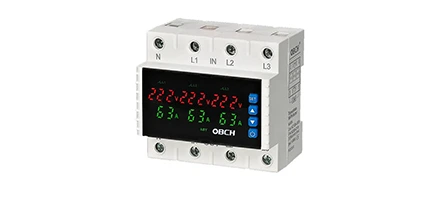
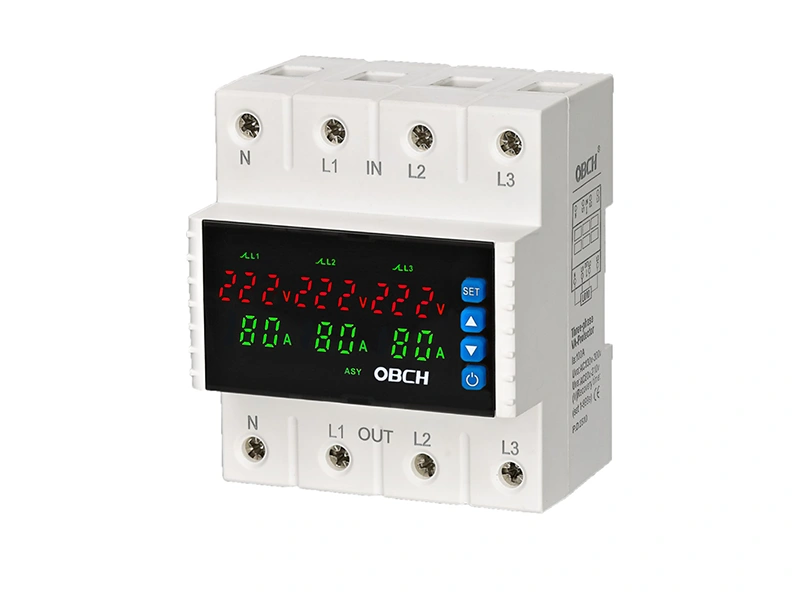
Most industrial 3‑phase systems operate at 380V, 400V, or 480V. A suitable voltage protector must accommodate the full range of possible fluctuations without nuisance tripping at normal levels. For example, the OBS7-6/3P+N model offers a wide operating range of 80–300V for single‑phase variants, while 3‑phase versions support adjustable over/under voltage trip thresholds from 180V to 480V.
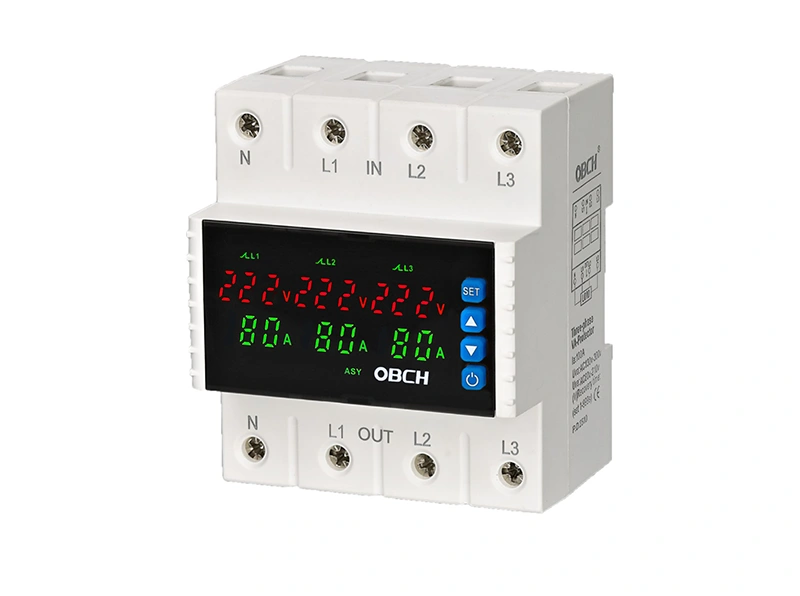
When evaluating a protector, verify:
The nominal voltage of your machinery (e.g., 380V, 400V, 480V)
The acceptable voltage window for your equipment (check manufacturer specifications)
Whether the protector‘s adjustable range covers both the minimum and maximum expected voltage
Fixed‑threshold protectors trip at preset voltage levels. Adjustable models allow you to set custom overvoltage and undervoltage trip points based on your equipment’s tolerance.
Why adjustability matters:
Different machines have different voltage tolerances. A CNC controller may be more sensitive than a pump motor.
Grid conditions vary by location. In areas with chronic undervoltage, a fixed protector may trip too frequently.
Seasonal load changes can affect local voltage levels.
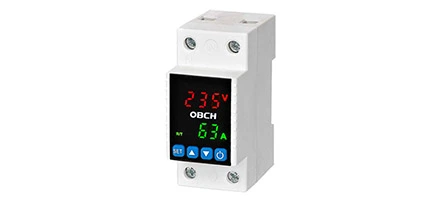
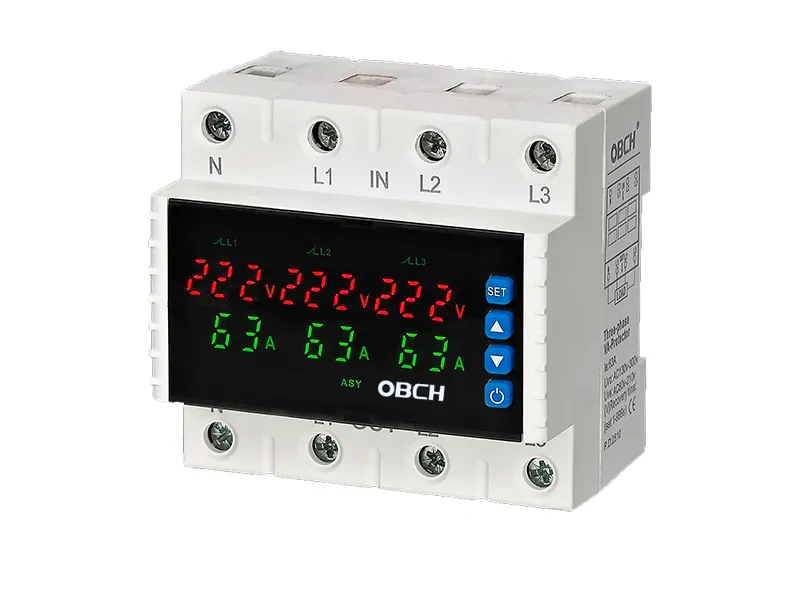
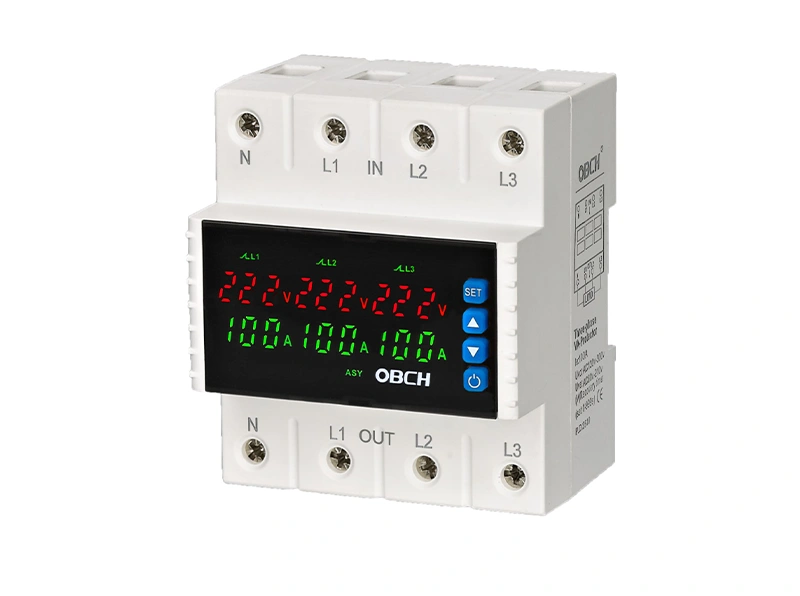
An adjustable protector typically offers a dial or digital interface for setting overvoltage and undervoltage thresholds independently. Digital display models provide real‑time voltage readings, making setup and troubleshooting easier.
Response time—the interval between detecting an anomaly and disconnecting the load—is critical. Faster is generally better, but the optimal speed depends on what you‘re protecting.
| Response Time | Typical Application | Consideration |
|---|---|---|
| < 0.2 seconds | Sensitive electronics, CNC controls, PLCs | Prevents damage from short‑duration spikes |
| 0.2 – 1 second | Motors, compressors, HVAC | Balances protection with nuisance trip avoidance |
| > 1 second | Pumps, fans, non‑critical loads | May allow transient damage |
Some protectors offer 0.2‑second ultra‑fast power disconnection for sensitive applications. Others allow configurable delay settings to ride through momentary sags that don‘t threaten equipment.
The protector must handle the full load current of your machinery. Common industrial ratings include 40A, 63A, 80A, and 100A.
Rule of thumb: Select a protector with a current rating at least equal to the full‑load amperage (FLA) of your largest motor or the total connected load, whichever is higher. Oversizing by 20–25% provides a safety margin for starting currents and future expansion.
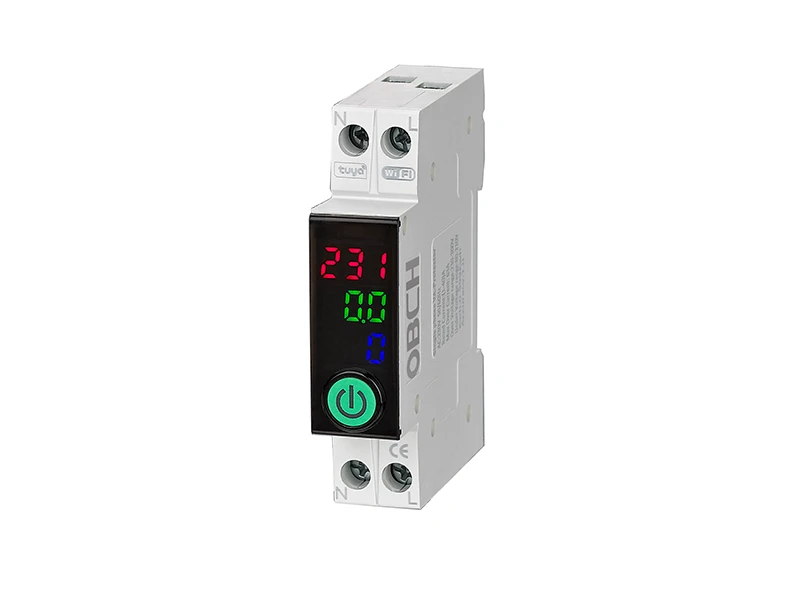
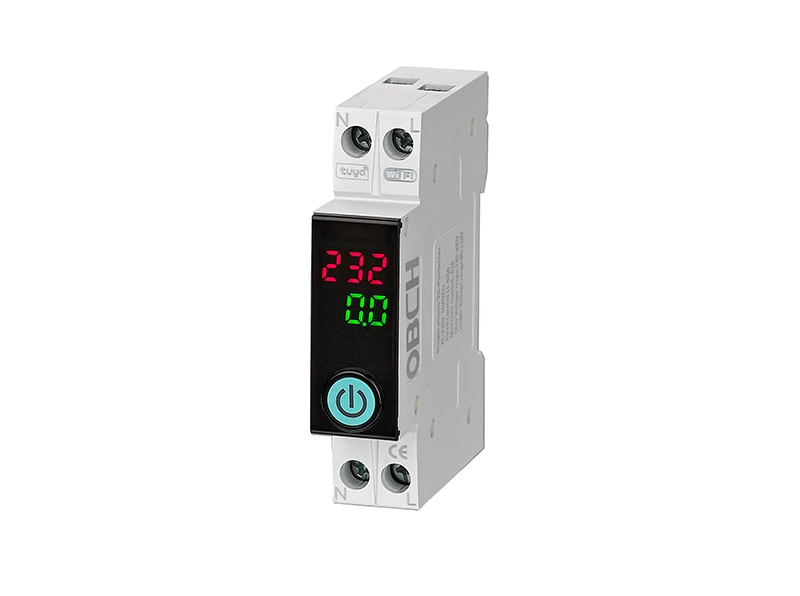
Most industrial applications require 3‑phase protection (3P or 3P+N). Single‑phase protectors (1P+N) are not suitable for 3‑phase machinery.
A true 3‑phase protector monitors all three phases and detects:
Overvoltage on any phase
Undervoltage on any phase
Phase loss (one or more phases missing)
Phase imbalance (voltage difference between phases)
Neutral loss (for 3P+N configurations)
Phase imbalance protection is particularly important for motors, as unbalanced voltage can cause excessive current in one winding, leading to overheating and premature failure.
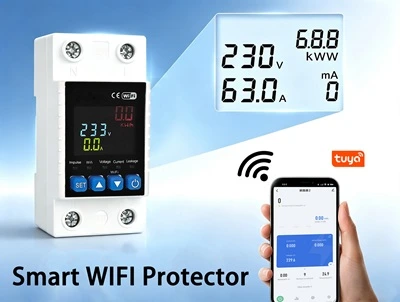
A digital LCD display provides real‑time voltage and current readings, making it easier to:
Verify correct installation
Monitor grid conditions over time
Diagnose trip events
Adjust settings accurately
Protectors with built‑in displays eliminate the need for external meters during commissioning and troubleshooting.
Industrial voltage protectors are typically DIN‑rail mounted inside distribution panels. Before selecting a model, confirm:
| Factor | What to Check |
|---|---|
| DIN‑rail compatibility | Standard 35mm DIN rail |
| Enclosure rating | IP20 for indoor panels, higher for dusty or wet environments |
| Operating temperature | Match the panel‘s ambient conditions |
| Space constraints | Width per pole (1P+N vs. 3P+N takes more space) |
Different industrial applications place different demands on voltage protection.
CNC Machines and Precision Equipment
These require fast response (< 0.2 seconds) and tight voltage windows. Even brief overvoltage events can damage servo drives or cause positioning errors. Look for digital models with fine‑tune adjustability and real‑time monitoring.
HVAC Systems
Compressors are sensitive to phase loss and undervoltage. Protection should include phase imbalance detection. Response time can be slightly longer (0.5–1 second) to avoid nuisance trips from normal starting transients.
Pumps and Conveyors
These motors are relatively robust but still require protection against phase loss and severe over/under voltage. Cost‑effective electromechanical or basic digital protectors may suffice.
Base Stations and Communication Equipment
These require reliable protection with wide voltage tolerance and CE certification for regulatory compliance.
Mistake 1: Choosing based on price alone
The cheapest protector may lack adjustability, display, or adequate response time. The cost of a single equipment failure typically far exceeds the price difference between a basic and a quality protector.
Mistake 2: Ignoring phase imbalance protection
Many buyers focus on over/under voltage and overlook phase imbalance. For 3‑phase motors, imbalance can be as damaging as sustained overvoltage.
Mistake 3: Incorrect current sizing
A protector rated too low will trip under normal starting currents. One rated too high may not trip quickly enough during a fault. Match the rating to your actual load.
Mistake 4: Skipping installation verification
Even the best protector won‘t protect if wired incorrectly. Verify input/output terminals, neutral connections, and phase assignments during installation.
Use this checklist when evaluating a 3‑phase voltage protector for industrial machinery:
Q: What voltage range should I look for in a 3‑phase protector for 380V machinery?
A: Look for a protector with an adjustable range that covers at least 320V to 460V, with typical overvoltage trip set around 440–460V and undervoltage around 320–340V. Models with 180–480V adjustment offer maximum flexibility.
Q: Can I use a single‑phase voltage protector on 3‑phase equipment?
A: No. Single‑phase protectors monitor only one phase and cannot detect phase loss or imbalance in a 3‑phase system. Always use a 3‑phase or 3P+N protector for 3‑phase machinery.
Q: How fast should a voltage protector respond to protect CNC equipment?
A: CNC and other precision equipment benefit from response times under 0.2 seconds. Faster disconnection minimizes the risk of servo drive damage and control system errors.
Q: What causes a voltage protector to trip frequently?
A: Frequent tripping can result from unstable grid voltage, incorrect trip threshold settings, poor neutral connections, or an internal protector fault. Verify grid conditions and settings before assuming the protector is defective.
Q: Do I need professional installation for a 3‑phase voltage protector?
A: Yes. Installation should be performed by qualified electricians who can verify correct wiring, torque terminal screws properly, and configure settings according to your equipment specifications.
Selecting a 3‑phase voltage protector for industrial machinery requires matching the device‘s voltage range, trip thresholds, response time, current rating, and phase configuration to your specific application. The most important rule: adjustability and response speed matter more than nominal specifications alone. A protector that can be fine‑tuned to your equipment‘s tolerance and environment will provide better protection with fewer nuisance trips.
Before making a purchase decision, review the available configurations and technical specifications of 3‑phase voltage protectors. Compare models with digital displays, adjustable thresholds, and phase imbalance protection. If your application involves sensitive equipment like CNC machines or precision controls, prioritize fast response and real‑time monitoring features.
For detailed product specifications and configuration options, explore the voltage and current protector product line. For project‑specific technical support, contact the OBCH technical team to discuss your machinery protection requirements.

 English
 Chinese
 Pусский
 Français
 Español
 Deutsch
 Português
 한국인
한국인 عربي
عربي