English
 Chinese
 Pусский
 Français
 Español
 Deutsch
 Português
 한국인
한국인 عربي
عربي Prev:
null

Aug 17,2026
Pageview: 36
If you are designing or upgrading an electrical distribution system, you may have encountered both voltage protectors and power factor correctors—and wondered whether you need one, the other, or both.
The short answer is: these two devices serve entirely different purposes. A voltage protector is a safety device that disconnects power when voltage goes outside a safe range. A power factor corrector is an efficiency device that improves how effectively electrical power is used. They are not interchangeable, and in many systems, both may be needed.
This article explains what each device does, the key differences between them, and—most importantly—how to determine which one your application requires.
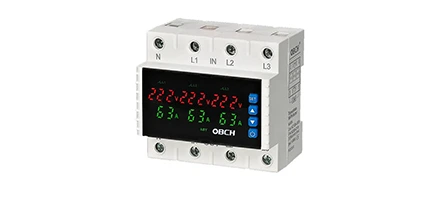
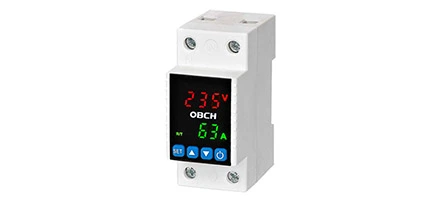
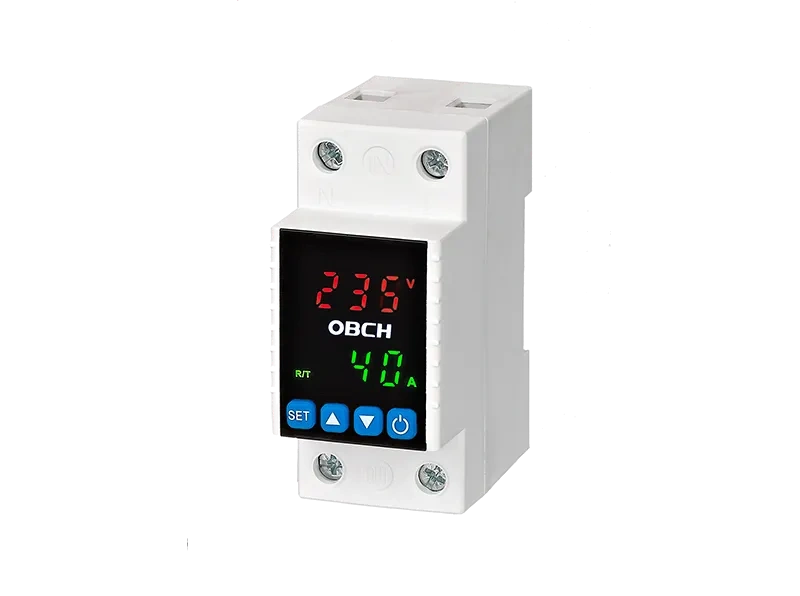
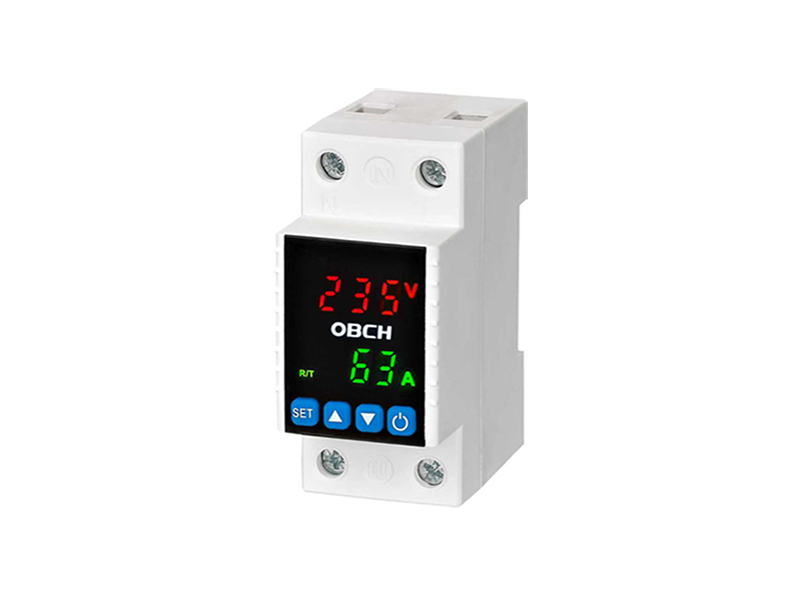
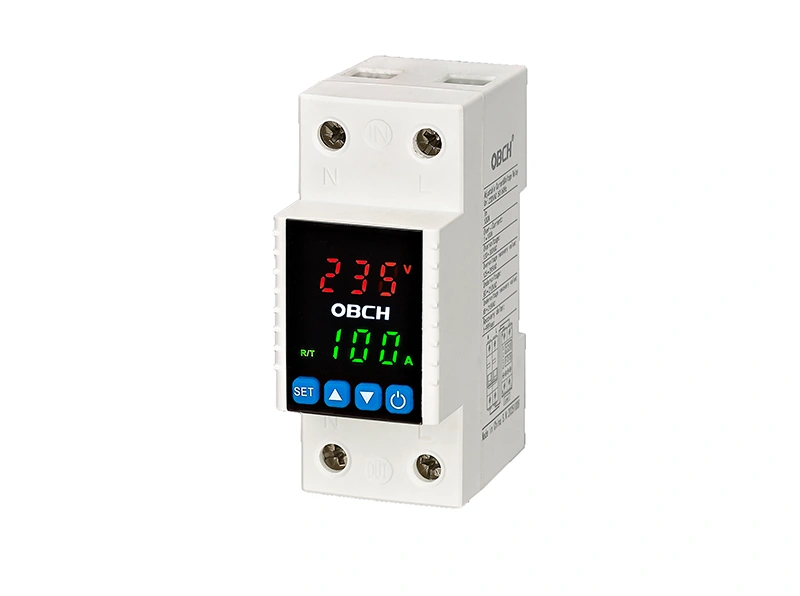
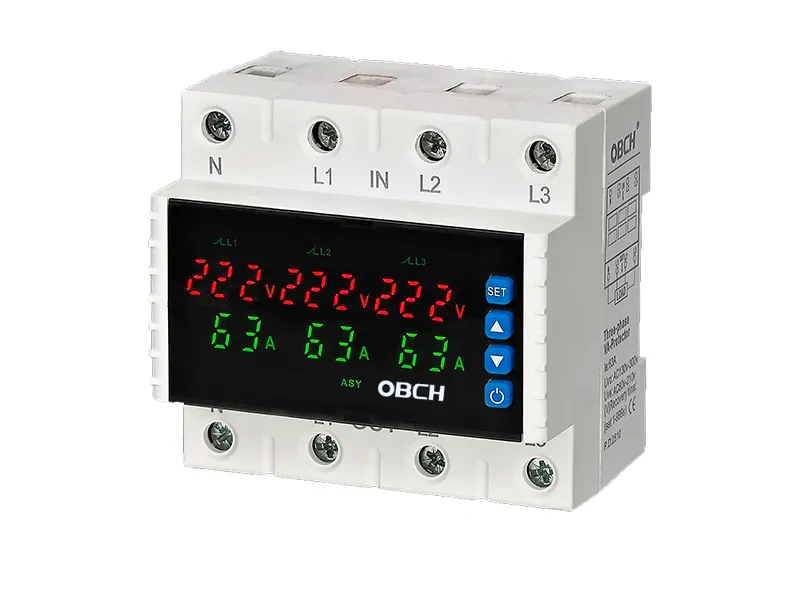
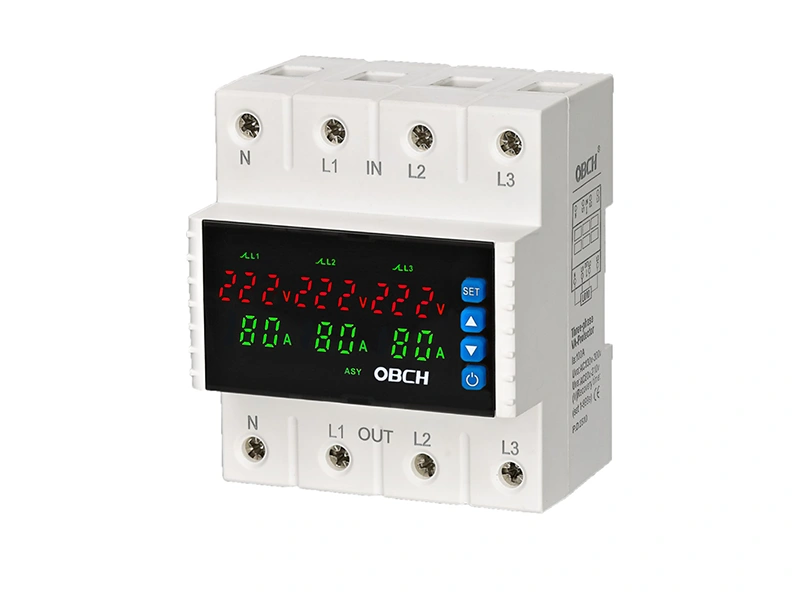
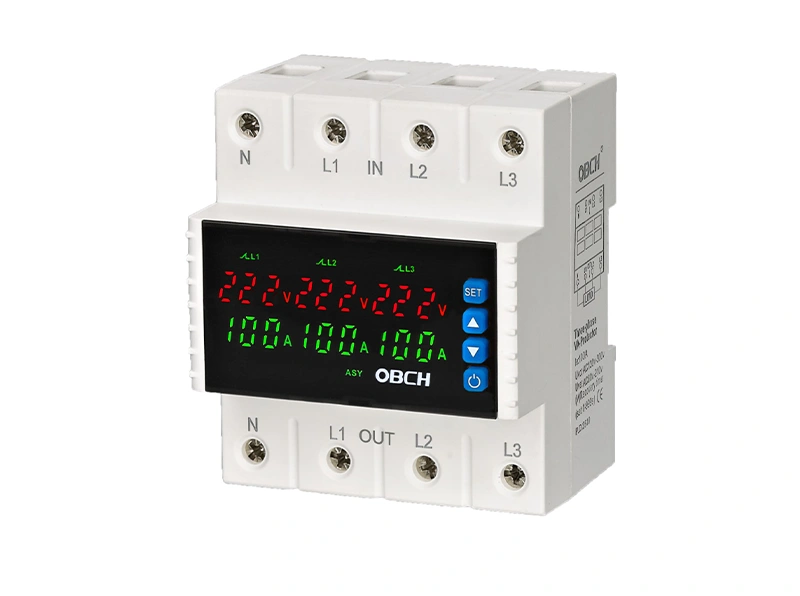
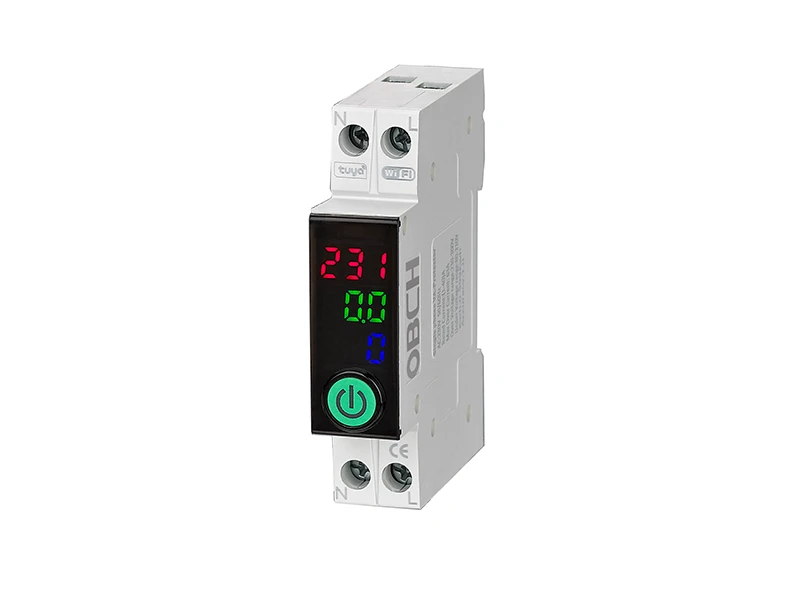
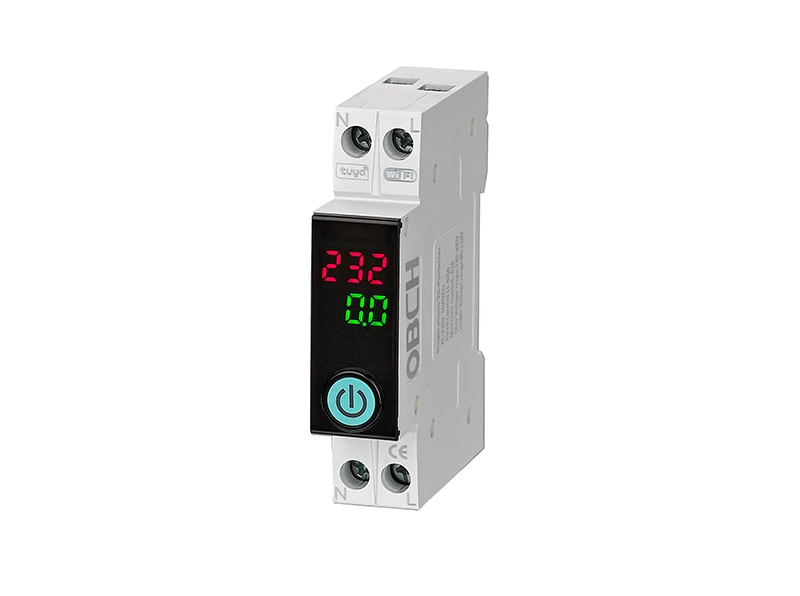
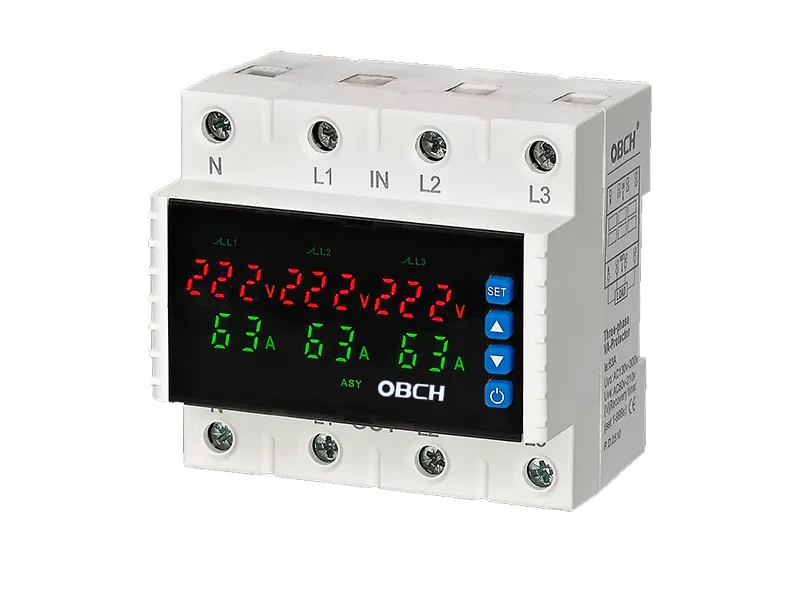
A voltage protector (also called an overvoltage/undervoltage protector or voltage monitoring relay) is a device designed to protect electrical equipment from abnormal voltage conditions.
It continuously monitors the incoming voltage and disconnects the load when voltage rises above or falls below a preset threshold. Once voltage returns to normal levels, the protector can automatically or manually reconnect power.
Common applications include:
Protecting household appliances from grid fluctuations
Safeguarding industrial equipment such as motors, compressors, and CNC machines
Preventing damage to sensitive electronics in data centers and communication base stations
Retrofitting older residential areas with unstable power supply
Key features of a typical voltage protector:
Wide voltage operating range (e.g., 80–300V for single-phase models)
Adjustable overvoltage and undervoltage trip thresholds
Fast response time (as low as 0.1–0.2 seconds)
Digital display for real-time voltage and current monitoring
DIN-rail mounting for distribution panel installation
A power factor corrector (PFC) is a device that improves the power factor of an electrical system—the ratio of real power (useful work) to apparent power (total power supplied).
In simple terms, poor power factor means that some of the electricity drawn from the grid is not doing useful work. This is typically caused by inductive loads such as motors, transformers, and fluorescent lighting, which cause the current and voltage waveforms to fall out of phase.
A PFC device works by:
Adding capacitance to the circuit to offset the inductive effect
Bringing the current and voltage back into alignment
Reducing the reactive power drawn from the utility
Common applications include:
Industrial facilities with large motor loads
Commercial buildings with HVAC systems and lighting
Facilities where utility companies impose penalties for low power factor
Key features of a power factor corrector:
Capacitor banks (fixed or automatically switched)
May include harmonic filtering in advanced models
Typically installed at the main distribution panel or near large inductive loads
Does not disconnect power—it continuously adjusts the electrical characteristics
| Feature | Voltage Protector | Power Factor Corrector |
|---|---|---|
| Primary Purpose | Safety — protects equipment from voltage damage | Efficiency — improves power quality and reduces energy waste |
| What It Monitors | Voltage level (over/under) | Phase relationship between voltage and current |
| What It Does | Disconnects power when voltage is abnormal | Adds capacitance to correct phase angle |
| Response to Fault | Trips and cuts off power | Does not trip — continuously adjusts |
| Impact on Equipment | Prevents damage from voltage surges and sags | Reduces heat, improves motor efficiency, may lower electricity bills |
| Installation Location | Branch circuits or individual equipment | Main distribution panel or near large loads |
| Typical Users | Homeowners, facility managers, equipment manufacturers | Industrial plants, commercial buildings, utilities |
A voltage protector is the right choice when your primary concern is equipment safety in the face of unstable power supply.
Use a voltage protector when:
1. Your grid supply is unreliable.
If your location experiences frequent voltage fluctuations, brownouts, or surges, a voltage protector can prevent damage to connected equipment.
2. You are protecting sensitive or expensive equipment.
Equipment such as CNC machines, HVAC systems, medical devices, and communication equipment can be damaged or destroyed by voltage anomalies. A voltage protector provides a hard disconnect before damage occurs.
3. You are installing equipment in a residential or commercial setting with unknown power quality.
For applications like residential circuit renovation, voltage protectors are often specified to safeguard branch circuits and appliances.
4. You need adjustable trip thresholds.
Different equipment has different voltage tolerances. An adjustable voltage protector allows you to set the overvoltage and undervoltage trip points to match the specific requirements of your load.
5. You require fast response time.
Some voltage protectors can disconnect power within 0.1 to 0.2 seconds, which is critical for protecting sensitive electronics from rapid voltage spikes.
A power factor corrector is the right choice when your primary concern is energy efficiency and utility cost reduction.
Use a power factor corrector when:
1. Your facility has a large number of inductive loads.
Motors, transformers, and fluorescent lighting are common sources of poor power factor. If your facility operates many of these, a PFC can significantly improve overall efficiency.
2. Your utility company charges a power factor penalty.
Many industrial and commercial tariffs include penalties for power factor below a certain threshold (typically 0.85–0.90). A PFC can help avoid these charges.
3. You want to reduce heat and increase equipment lifespan.
Poor power factor causes motors and transformers to draw more current than necessary, generating excess heat. Correcting the power factor reduces this heat and can extend equipment life.
4. You need to increase system capacity without upgrading infrastructure.
Improving power factor reduces the total current drawn from the grid, freeing up capacity in existing cables, transformers, and switchgear.
Yes—and in many industrial and commercial applications, both devices are used together.
A typical setup might include:
A voltage protector at the main incoming supply or on critical branch circuits to safeguard against voltage anomalies
A power factor corrector at the main distribution panel to improve overall system efficiency
These devices address different problems and do not interfere with each other. In fact, using both provides comprehensive protection and efficiency optimization.
Use this checklist to determine which device your application requires:
| Question | Yes | No |
|---|---|---|
| Is your equipment sensitive to voltage fluctuations? | → Voltage Protector | → Continue |
| Does your location experience frequent power surges or sags? | → Voltage Protector | → Continue |
| Are you protecting expensive or critical equipment? | → Voltage Protector | → Continue |
| Does your facility operate many motors, transformers, or inductive loads? | → Consider PFC | → Continue |
| Does your utility bill include power factor penalties? | → Consider PFC | → Continue |
| Do you want to reduce energy waste and improve efficiency? | → Consider PFC | → Continue |
Misconception 1: "A voltage protector can improve power factor."
No. A voltage protector does not affect the phase relationship between voltage and current. Its sole function is to disconnect power during abnormal voltage conditions.
Misconception 2: "A power factor corrector can protect against voltage surges."
No. A PFC does not monitor or respond to voltage levels. It does not provide overvoltage or undervoltage protection.
Misconception 3: "I only need one of these devices."
Not necessarily. Many systems benefit from both: voltage protection for safety and power factor correction for efficiency.
Q: Can a voltage protector replace a power factor corrector?
No. These devices serve entirely different functions. A voltage protector is a safety disconnect device; a power factor corrector is an efficiency optimization device. They are not interchangeable.
Q: What happens if I install a voltage protector but my power factor is poor?
Your equipment will be protected from voltage anomalies, but you will still experience the efficiency losses and potential utility penalties associated with poor power factor. The two issues are independent.
Q: What happens if I install a power factor corrector but my voltage is unstable?
Your power factor will improve, but your equipment will remain vulnerable to voltage surges, sags, and brownouts. A PFC does not provide any voltage protection.
Q: How do I know if my power factor needs correction?
You can measure power factor using a power quality analyzer or check your utility bill—many utilities indicate power factor or include penalty charges. A power factor below 0.85 typically warrants investigation.
Q: Do voltage protectors require maintenance?
Most voltage protectors are solid-state devices with no moving parts. However, they should be periodically tested to ensure trip settings are correct and the device responds properly. OBCH voltage protectors are rated for 1 million mechanical operations and 100,000 electrical operations.
Q: How fast does a voltage protector respond?
Response time varies by model. OBCH adjustable voltage protectors can disconnect power in as fast as 0.1 seconds, providing rapid protection for sensitive equipment.
The choice between a voltage protector and a power factor corrector comes down to what problem you are trying to solve.
If you need to protect equipment from voltage damage — choose a voltage protector.
If you need to improve energy efficiency and reduce utility costs — choose a power factor corrector.
If you need both protection and efficiency — install both devices in your system.
Do not make the mistake of assuming one device can do the other's job. They are complementary, not competitive.
If you are unsure about your specific application requirements, review the available adjustable voltage protector configurations to understand the protection options available, or consult with a qualified electrical engineer to assess your system's needs.