
Aug 04,2026
Pageview: 34
Selecting the right motor protector requires matching the device's current rating to your motor's full-load amperage, ensuring compatibility with your voltage supply, and confirming that the protector covers the specific fault types your application is most vulnerable to—typically overload, phase failure, and phase unbalance. This guide walks through the key selection criteria so you can make an informed decision for your specific equipment.
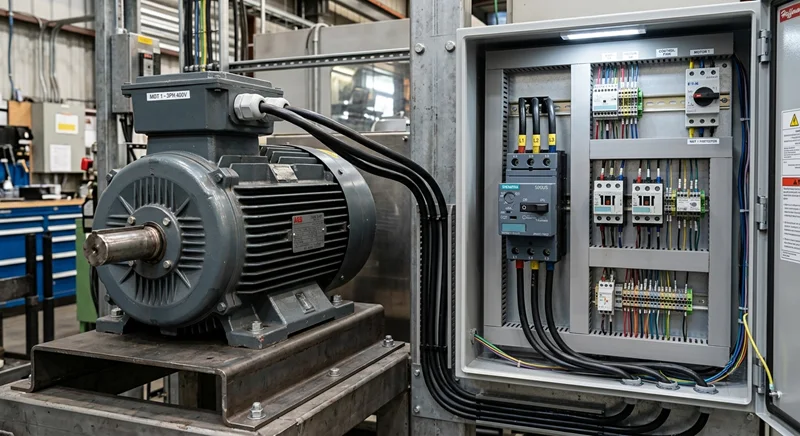
Motors are the backbone of industrial and commercial operations. Whether you are running pumps, compressors, fans, or conveyor systems, unexpected motor failure can halt production, increase maintenance costs, and shorten equipment lifespan. A properly selected motor protector serves as the first line of defense against electrical faults that can cause irreversible damage.
A motor protector is a device that monitors electrical conditions in a motor circuit and disconnects power when it detects abnormal operating conditions. The most common protection functions include:
Overload protection — Prevents damage from prolonged overcurrent conditions
Phase failure protection — Detects when one phase of a three-phase supply is lost and disconnects the motor within seconds
Phase unbalance protection — Responds to voltage or current imbalances between phases
Short-circuit protection — Guards against severe fault conditions
Locked rotor protection — Protects the motor when the rotor cannot turn
Some advanced protectors also offer temperature monitoring and communication capabilities for integration with control systems.
The most fundamental selection criterion is matching the protector's current range to your motor's actual operating current. The protector's adjustable current range must cover the motor's full-load ampere (FLA) rating.
For the JD series protectors, for example, available current ranges include 20–100A and 20–400A options. When selecting, consider:
The motor's nameplate FLA rating
Whether the motor operates continuously or intermittently
Startup current characteristics (inrush current can be significantly higher than running current)
A protector with an adjustable current range that brackets your motor's FLA allows for fine-tuning to prevent nuisance tripping while maintaining adequate protection.
Verify that the protector supports your power supply voltage. Most industrial three-phase motors operate at 220V or 380V at 50/60Hz. The protector's rated control supply voltage must match your system voltage.
Different applications face different risks. Consider what protection functions your motor actually needs:
| Application | Primary Risks | Protection Priorities |
|---|---|---|
| Pumps | Phase failure, overload, dry running | Phase failure, overload |
| Compressors | Overload, locked rotor, voltage unbalance | Overload, phase unbalance |
| Conveyors | Overload, jammed conditions | Overload, locked rotor |
| Fans | Phase failure, prolonged overload | Phase failure, overload |
| Mixers | Overload, stall conditions | Overload, locked rotor |
Environmental conditions affect both motor performance and protector reliability. Standard operating conditions for the JD series include:
Altitude not exceeding 2000 meters
Ambient temperature between −5°C and +40°C
Rated control supply voltage range of 85%–110% of rated voltage
Locations without serious vibration or explosion risk
Protection from rain, snow, and corrosive atmospheres
If your application falls outside these parameters, consult the supplier for special configurations.
Motor protectors offer different reset methods. The JD-6A-R model, for example, includes a dedicated reset button for manual reset after a fault trip. Other models require power-off and power-on again to reset. Consider:
Manual reset — Requires operator intervention, useful for identifying and addressing fault causes before restart
Automatic reset — Restarts automatically after fault clears, suitable for remote or unattended installations
Protectors provide output contacts that interface with contactors or control systems. Common configurations include:
1 normally open (NO) contact
1 normally open + 1 normally closed (NC) contact
The contact capacity must be sufficient for your control circuit. Typical ratings are AC380V/3A or AC220V/5A (resistive).
For modern industrial facilities, integration with control systems may be important. Models with RS485 communication support MODBUS-RTU protocol for integration with PLC and SCADA systems. Consider whether your application requires:
Remote monitoring of motor status
Integration with building management systems
Data logging for predictive maintenance
Mismatching current range — Selecting a protector with a current range that does not cover the motor's FLA is the most common error. Always verify the nameplate rating.
Ignoring phase failure protection — For three-phase motors, phase failure protection is essential. A missing phase can cause the motor to draw excessive current on remaining phases, leading to rapid overheating.
Overlooking environmental factors — High ambient temperatures, vibration, or corrosive conditions can affect protector performance and longevity.
Choosing based on price alone — Inadequate protection can lead to motor failure, which typically costs far more than the protector itself.
Proper installation is critical for reliable protection. Key points include:
Installation by qualified electricians
Correct current transformer (CT) wiring
Proper parameter settings for the specific motor
Verification of trip settings before putting the motor into service
The protector should be mounted on a TH35 type mounting rail or secured with screws.
Regular inspection of the motor protector helps ensure continued reliability. Check for:
Loose connections
Signs of overheating or damage
Correct display readings
Proper trip settings
When a protector trips due to a fault, the fault indicator typically provides diagnostic information. Always investigate and address the root cause before resetting and restarting.
Q: What motor power range does a typical motor protector support?
A: Motor protectors are available for motors from 0.5HP to 600HP, with current ratings from 1A to 600A to match various application requirements.
Q: Can a motor protector be used with both single-phase and three-phase motors?
A: Most comprehensive motor protectors are designed for three-phase AC power supply circuits at 50/60Hz and voltages of 380V or lower. Single-phase applications require specifically rated devices.
Q: What is the difference between overload protection and short-circuit protection?
A: Overload protection responds to prolonged overcurrent conditions (typically above the motor's FLA), while short-circuit protection responds to severe fault currents that can cause immediate damage. Both are important for comprehensive motor protection.
Q: How do I know if my motor protector has tripped due to phase failure?
A: Most modern protectors with LCD displays provide fault codes or indicators. For the JD series, phase failure action time is typically ≤3 seconds. Check the display or indicator lights for diagnostic information.
Q: Is professional installation required for a motor protector?
A: Yes, installation by qualified electricians is recommended to ensure correct CT wiring and parameter settings for optimal protection performance.
Q: What is the typical warranty period for a motor protector?
A: Most manufacturers provide a 2-year warranty with technical support, backed by factory-direct quality assurance.
Selecting the right motor protector comes down to matching the device's specifications to your motor's requirements and operating conditions. Start with the motor's FLA and voltage, confirm the necessary protection functions for your application, and verify environmental compatibility. Avoid the common mistake of choosing based on current rating alone—phase failure protection, reset mechanism, and contact configuration are equally important for reliable operation.
For applications involving pumps, compressors, or conveyors, a comprehensive protector with overload and phase failure protection provides a solid foundation. If your operation requires remote monitoring or system integration, consider models with communication capabilities.
Review the available motor protector configurations to compare models and specifications. For specific application requirements or custom configurations, discuss your material and production requirements with the technical team.
All specifications mentioned in this article are based on published product documentation. Actual performance depends on operating conditions and should be verified through proper testing and installation.

 English
 Chinese
 Pусский
 Français
 Español
 Deutsch
 Português
 한국인
한국인 عربي
عربي